
Tracing Former Owners of a Newport News Property
A former-owner search in Newport News is a walk down the deed chain. It is not a glance at the assessor's current owner field. That field shows one moment in time. The full history sits in the instruments recorded by the Circuit Court Clerk. Each conveyance there names a grantor and a grantee. For volumes that predate local online coverage, the Library of Virginia catalog points to older deed books and their indexes. Plats and probate files fill in the gaps. They explain a redrawn lot or an estate transfer. The trail moves from the newest deed into progressively older records, parcel number by parcel number.
| Chain position | Party relationship | Reference to save | Next move |
|---|---|---|---|
| Latest conveyance | Current grantee was named as a recipient | Date, parties, legal description, and instrument reference | Use its grantor as the previous link |
| Prior transfer | Last deed's grantor appears as an earlier grantee | Earlier date and book/page or instrument number | Repeat with the earlier grantor |
| Older index era | Deed name search before July 1982 needs Special Index Search | Party spelling and land description | Move to the Clerk's special or bound index |
| Historical volume | Deed books and indexes are listed in the LVA catalog | Book, reel, and page reference | Inspect the identified series under access rules |
Start at the newest deed and work backward while the party index stays readable. That is the whole method. Name searches for deeds older than July 1982 require the Special Index Search instead. For still older volumes, the Library of Virginia catalog can identify the right reel or book series. The library's access rules govern what you may view. A plat or an estate file sometimes explains a break in the chain. Still, the recorded conveyance remains the record that proves the land changed hands.
Newport News and Former Warwick Records
Newport News merged with the City of Warwick in 1958. That merger shapes any deep property search. A single modern parcel may therefore have older deed records indexed under Warwick County. Others sit under the City of Warwick instead. Search under the name shown on the prior instrument. Do not force every record into today's city label. Other eras help too. The railroad reached Newport News Point in 1881. The city charter dates to 1896. Both are useful markers for placing a neighborhood in time. North End and East End grew as early suburbs. Hilton Village was planned during World War I as roughly 500 War Shipping Board residences. Later development pushed through the former Warwick countryside toward Denbigh-Warwick and Lee Hall. Those names can surface in a subdivision plat or deed description. The current address may use a newer street name. Anchor the older search with the exact legal description from the most recent deed. The official Newport News history of consolidation gives the merger context.
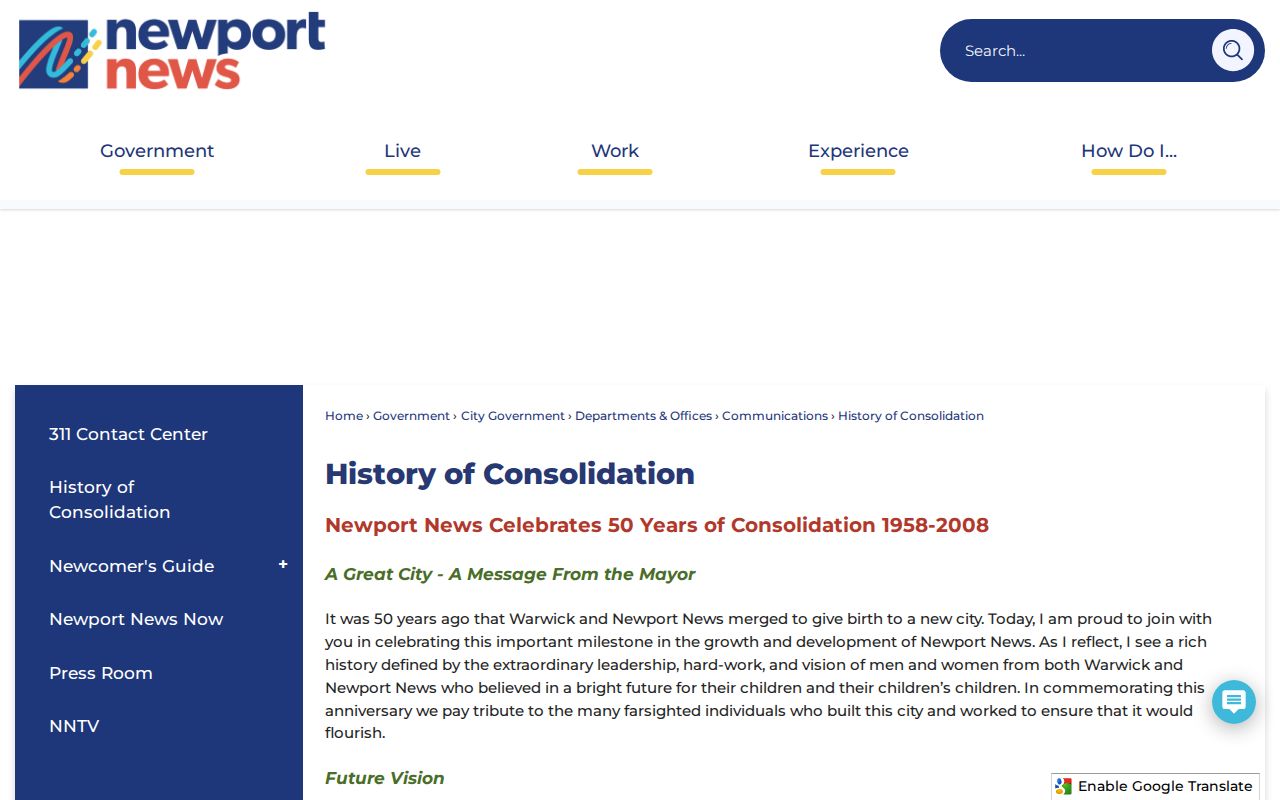
A historical label difference often just reflects the locality change. It does not mean the land record belongs to some other modern parcel in Newport News.
Before the Newport News Online Name Index
The Clerk's agreement says deed data reaches back to October 1865. Yet online name searches skip anything before July 1982. Use the Special Index Search for anything earlier. That gap is the practical break in a former-owner search. Follow the current deed until the online results stop. Keep the last party name. Also keep the book and page or instrument number and the land description. Before hand-searching a broad surname, ask the Clerk which older index or book applies. Other record types start even later. Financing statements have a separate indexing start of July 1, 1991. Judgments begin July 1, 1990. Neither date extends deed-name coverage. A lien or judgment may sit in a different party index than the deed itself. Identify the record type first. The Clerk's remote agreement also gives a warning. Remote index information may not be the official record.
Newport News Deed Books on Microfilm
The Library of Virginia's Newport News catalog lists deed books and grantor/grantee indexes beginning in 1896. Examples run from Deed Books 2 and 3 through later volumes like Books 10-15, plus Books 327 and 328 from 1958. Release deed books are listed as well. The catalog identifies which series to inspect or request. Copying and access depend on the library's rules. The collection earns its keep when a prior owner's deed falls outside the online name index, or when an instrument reference points to a bound volume. Search the index for the party. Copy the volume and page. Then inspect the corresponding deed. The property description can show how the lot was conveyed, while a release book documents a paid security instrument rather than an ownership transfer. The Library of Virginia catalog for Newport News deed books and indexes identifies the historical series.
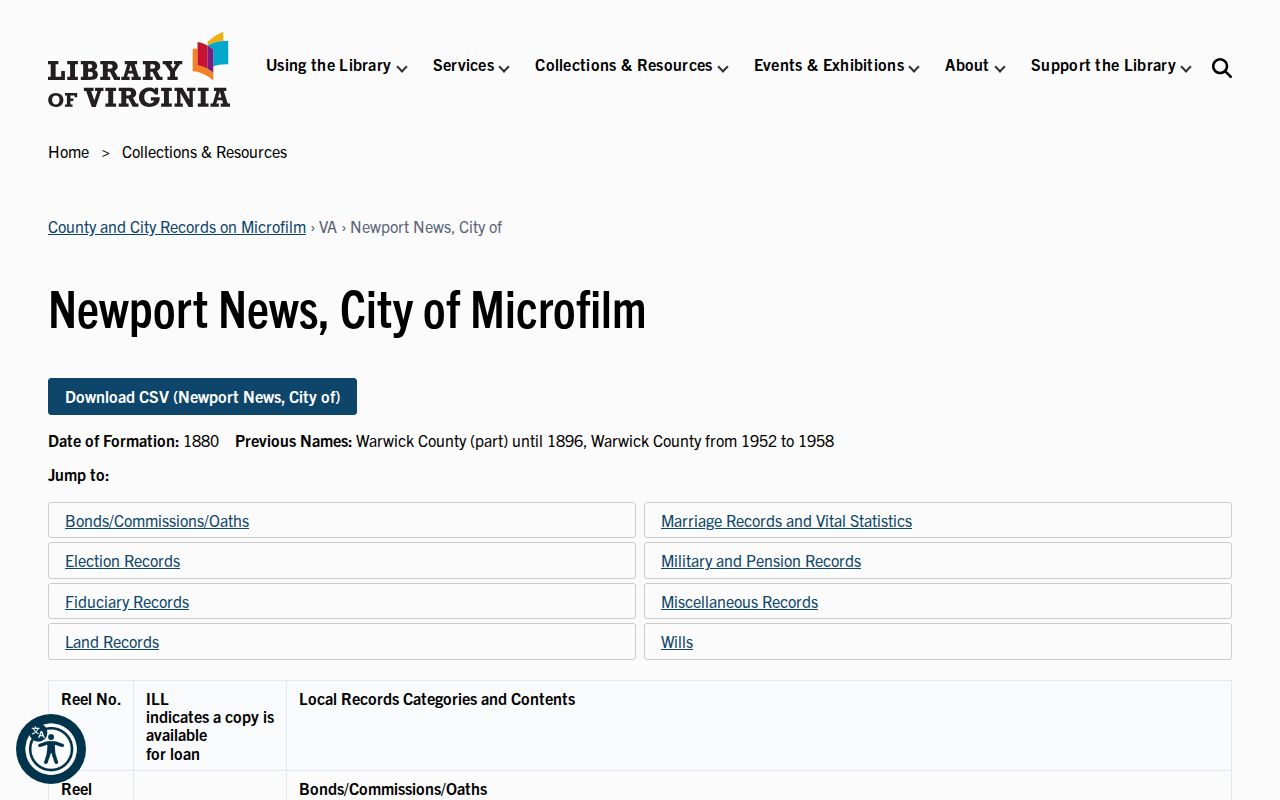
Choosing the right volume through the catalog beats guessing at an old book from a street address. Deed records reward precision, and the index supplies it.
Walking the Newport News Deed Chain Backward
Trace one deed at a time, keeping the same land description in view. Begin with the latest grantee. Find the instrument where that party received the property. Read that deed's grantor, then repeat the process, deed by deed, until the chain runs out. A grantor transfers an interest; a grantee receives it. The chain is the sequence of recorded instruments, not merely a list of people who once lived at a Newport News address.
- Find the latest recorded conveyance and note its grantee and legal description.
- Use that document's grantor as the prior party and search for the deed conveying to the current grantee.
- Compare the book/page or instrument reference and land description before accepting the match.
- Repeat until the index stops, then continue through Special Index Search and older volumes.
- Grantor
- The party conveying an interest in the instrument.
- Grantee
- The party receiving the interest described.
- Chain of title
- The ordered sequence of recorded transfers for the property.
- Legal description
- The land description in the deed or plat, which can be more useful than an old street address.
Land does not always move by plain sale. Sometimes an estate, a trust, or a company stands in the chain of title. An executor or administrator may sign the deed for an estate. A trustee may appear where a trust once held the parcel. Deed types differ, too. A quitclaim deed passes only whatever interest the grantor holds, with no promise about title. A warranty deed backs the transfer with guarantees. The label matters less than the instrument itself. Read the recorded deed and the records around it before drawing conclusions about who owned what.
Newport News Ownership Record Eras
Where you look depends on how old the transfer is. Deeds in Newport News reach back to October 1865, per the Clerk's agreement. The online name search only covers back to July 1982. Anything earlier lives in archival series rather than the digital index. The Library of Virginia catalog lists early Newport News deed books, 1958 books, release volumes, wills, and fiduciary material. So a July 1982 cutoff marks an index limit. It is not the start of the records themselves.
| Period or series | Record location | Use in a former-owner search |
|---|---|---|
| Before July 1982 deed name search | Clerk Special Index Search | Continue party-name tracing where the ordinary remote name search stops |
| Late 1890s books | Clerk books and LVA microfilm catalog | Locate early deed volumes and grantor/grantee indexes |
| 1958 deed and release books | Clerk and LVA catalog | Read transfers around the Newport News-Warwick consolidation |
| Probate and fiduciary series | Clerk records and LVA catalog | Explain transfers through an estate or fiduciary |
Estate Transfers in Newport News Chains
Not every ownership change in a Newport News chain came from a sale. Some passed through an estate. A will names an executor; without one, an administrator steps in. The probate or fiduciary file can show the estate representative and the heirs. Another recorded land instrument can do this work too. The deed is what actually confirms the property interest. The deed is also what transfers it. A death certificate helps you find the probate case. It never moves title by itself.
The Library of Virginia catalog holds Newport News fiduciary settlements from 1896 through 1919. It also holds administrators' and executors' bond material. Wills from the 1940s are there too. Virginia vital records open on their own schedule. Births become public after 100 years; deaths, marriages, divorces, and annulments after 25. Exceptions and redactions still apply. A current certified certificate stays limited to eligible applicants. So a public index and a certified record are two different doors.
Newport News Library and Local History
A deed chain sometimes needs family or neighborhood context. The Newport News Public Library's Virginiana Room is the local fallback. The room holds more than 4,300 volumes on Virginia genealogy and local history. Its material links Warwick County and Newport News sources. Photographs, local stories, and historical setting round out the collection. It can explain a place-name change or point toward a record series. Still, the recorded deed remains the proof of a transfer. The Virginiana Room collection page describes the local-history and genealogy holdings in full.
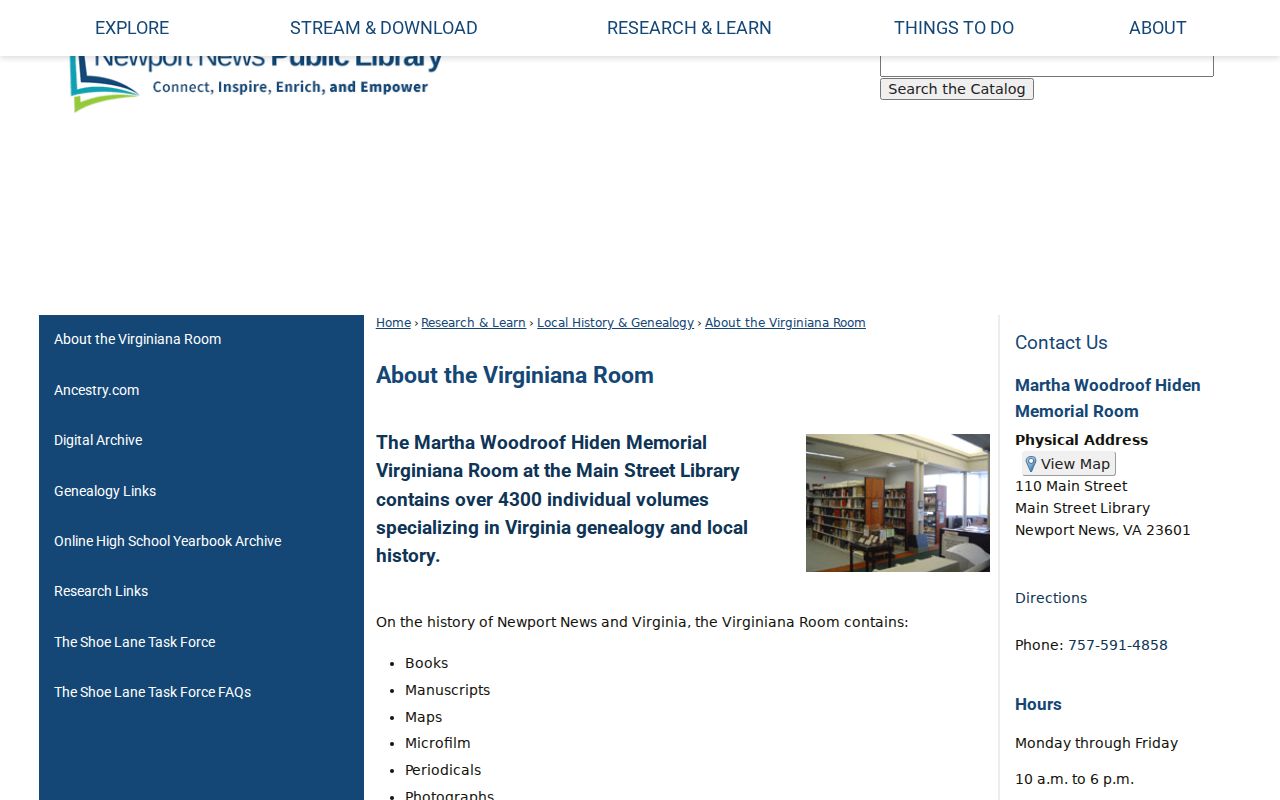
Old owners often make sense only with local context. A historic deed name or neighborhood may not be clear from a modern parcel card alone. Newport News Library local-history and genealogy resources open that path to additional local material.
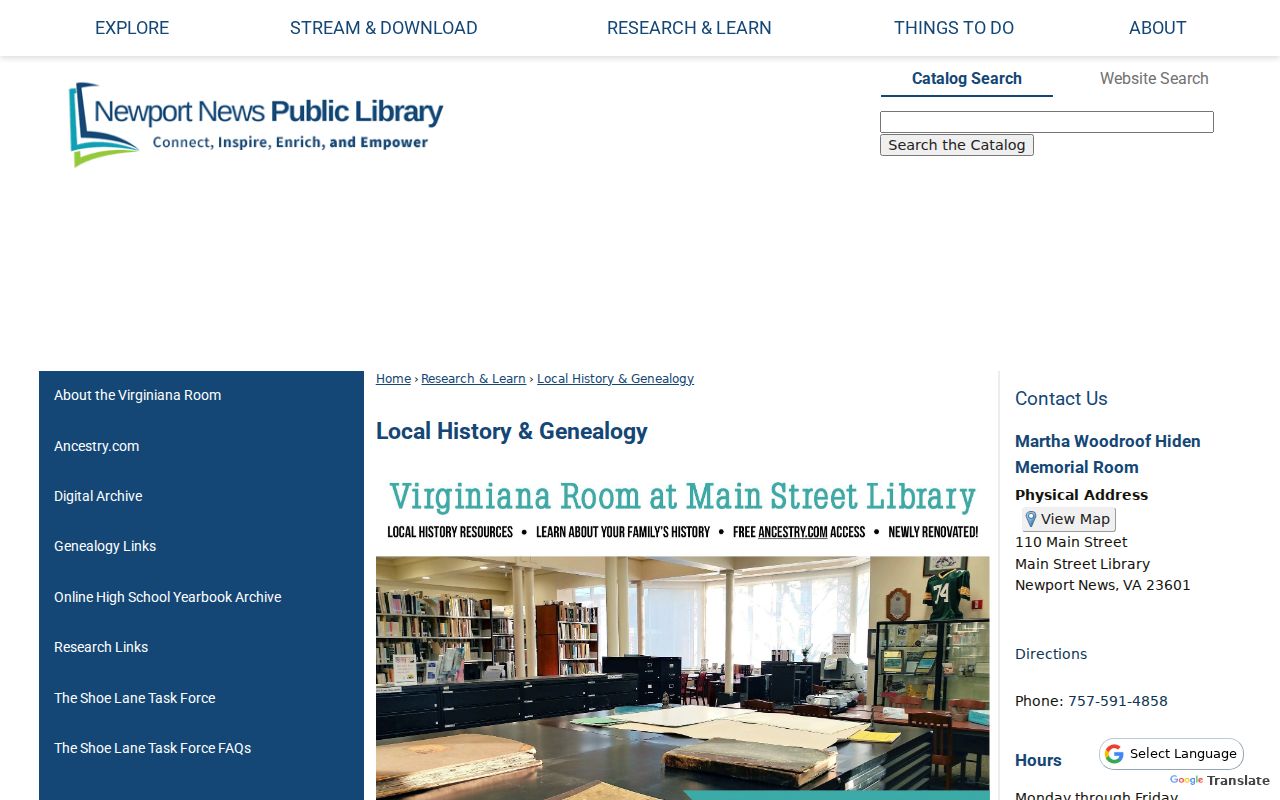
A trip through the library's local history shelf can clear up why a subdivision name shifted over time. It still cannot stand in for the legal description found in a recorded plat or deed.
How Far Newport News Ownership Records Reach
Deed records in Newport News reach back to October 1865. Older searches take extra care, though. Anything before July 1982 requires a Special Index Search rather than a standard name lookup. The Library of Virginia catalog lists deed volumes starting in 1896, along with later books from 1958, release deed books, and fiduciary materials. Newport News also absorbed land once governed by other localities, so older records may carry the Warwick County or City of Warwick label. A single ownership chain can pass through several locality names even when the current parcel is simple to locate by address. Two fires, the 1888 post-office fire and the 1896 shipyard fire, are sometimes blamed for wiping out Circuit Court land books. The official record shows no such destruction. A missing online match is not proof that a deed, plat, or tax roll entry was lost. Ask the Clerk about a Special Index search instead. Inspect the cited book itself. Then search the archival catalog for related volumes. Only after those steps should you assume a chain of title ends.
Lawful use. Research former Newport News owners for a home's history, an estate, or property due diligence. Do not use a deed chain to track, harass, or expose a living person.